

It’s Friday morning.
You’re in the shower.
The kids aren’t awake yet.
You have maybe four minutes of quiet.
And your brain — instead of resting in those four minutes — is running the 9am meeting, the unanswered text from your mother, the decision you’ve been postponing for three weeks, and a low-grade sense that something is about to go wrong.
No specific threat.
Just the feeling that one is coming.
That’s not anxiety.
That’s not being a worrier.
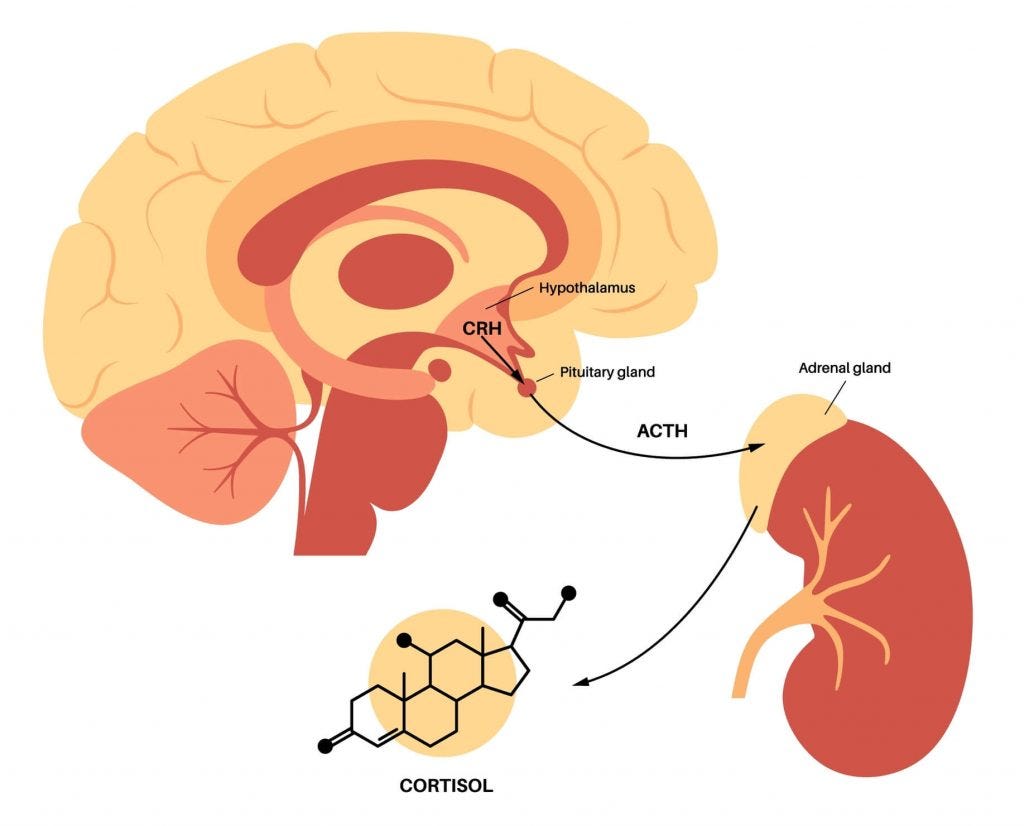
That’s a brain that has been running on chronically elevated cortisol for long enough that it has restructured itself around threat detection.
And the part of the brain that used to imagine — that used to see possibility, future, rest — has been quietly shrinking to make room for it.
Here’s what chronic cortisol is actually doing to your brain.
Not metaphorically. Structurally.
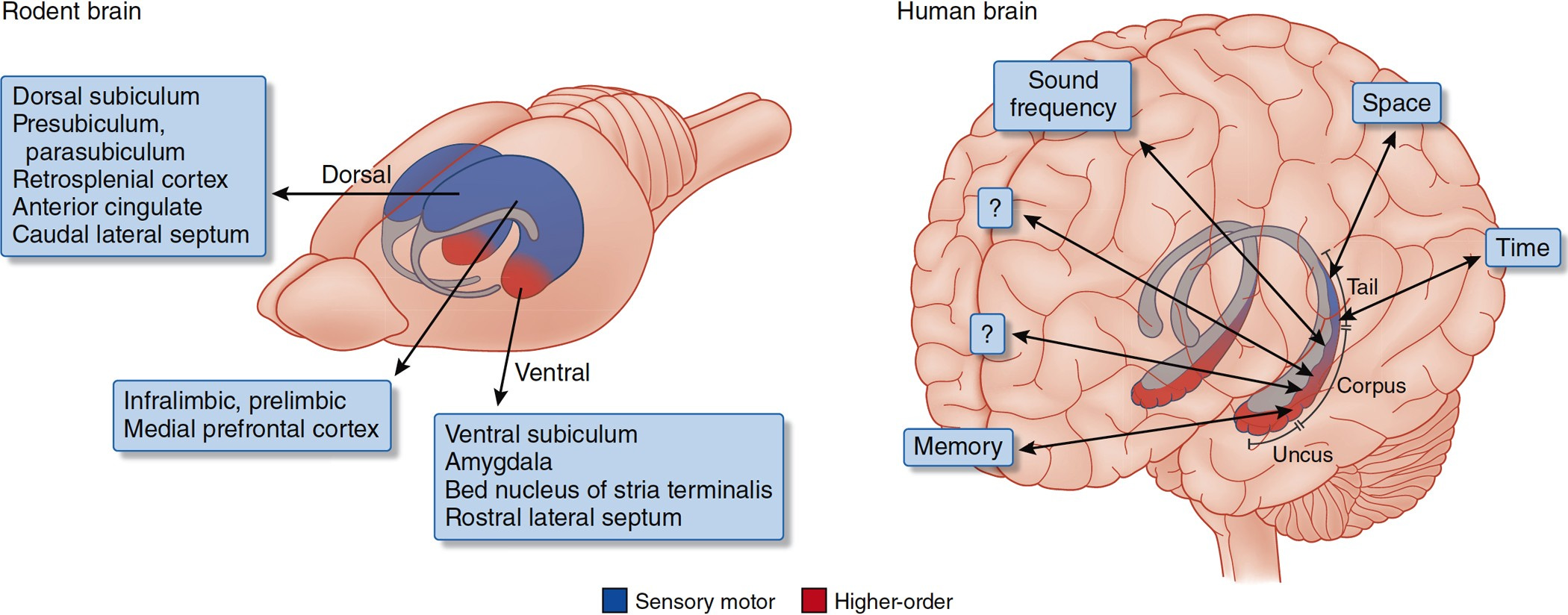
The hippocampus — the brain region responsible for memory formation, spatial navigation, and crucially, the ability to imagine future scenarios — is one of the most cortisol-sensitive structures in the entire nervous system. It is packed with glucocorticoid receptors. Under acute cortisol exposure, those receptors help the brain learn from threatening experiences. Under chronic cortisol exposure — the kind that runs continuously in a parent whose nervous system never fully returns to baseline — those same receptors trigger a process called dendritic atrophy. The branches of hippocampal neurons retract. The volume of the hippocampus measurably decreases. And with it goes something most people never connect to cortisol:
The imagination.
Not creativity in the artistic sense. The basic human capacity to mentally project into a future that is different from the present. To imagine rest. To imagine possibility. To see the life beyond the immediate threat.
Chronic cortisol doesn’t just make the present feel dangerous.
It makes the future feel inaccessible.
And the deeper problem — the one that explains why standard cortisol advice rarely fully works — is this:
The imagination has been hijacked by threat.
The brain is using its future-projection capacity not to imagine rest or possibility but to pre-run every potential danger. Every unresolved situation. Every conversation that hasn’t happened yet. Every decision that’s been postponed.
Cortisol keeps the brain in a permanent rehearsal of everything that could go wrong.
The fix isn’t relaxation.
It’s reclaiming the imagination from threat.
A mom in this community sent me a message three weeks ago.
“I used to be able to daydream,” she said. “I’d think about holidays we might take, things I wanted to do, how I wanted things to feel. I can’t do that anymore. Everything I imagine is just more of the same stress.”
She wasn’t losing her personality.
Her hippocampus had been running on chronic cortisol for three years without a real recovery window.
The daydreaming didn’t disappear.
It got redirected toward threat.
That redirection is reversible.
But not through thinking harder about it.
What You’ll Learn:
→ 7 daily habits that reverse cortisol’s structural effect on the brain — reordered by the mechanism that makes the reversal possible
→ Why four of them work on the body rather than the mind
→ The unfinished loop technique that stops cortisol running overnight (paid section)
→ The body-based imagination reclaim that most people dismiss as too simple (paid section)
→ Read time: 5 min
The habit that surprises you most is usually the one your nervous system hasn’t received in the longest time.
Start there.
7 Ways to Stop Cortisol Shrinking Your Brain
Reordered by mechanism — starting with the ones that work on the body before the mind.
1. Stop resting with stimulation — the recovery that isn’t recovering anything
Scrolling is not rest. Netflix while checking texts is not rest. A podcast while doing chores is not rest. The nervous system doesn’t recover during stimulation — regardless of how passive the stimulation feels.
Real rest has one defining characteristic: low input.
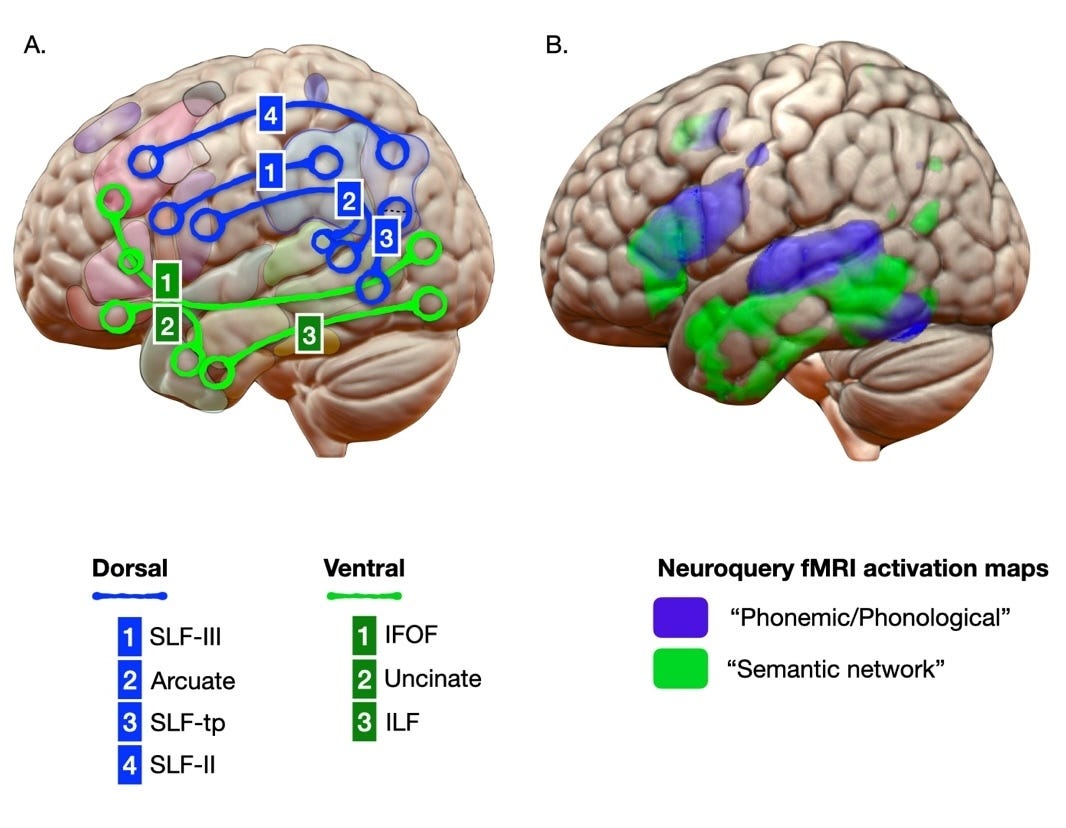
The default mode network — the brain’s internal processing system — activates during genuine rest. It is responsible for consolidating memory, processing emotional experience, generating creative thought, and producing the sense of internal coherence that chronic stress erodes. It cannot activate while external stimulation is competing for the same neural bandwidth. Every hour of stimulation disguised as rest is an hour the default mode network didn’t run. An hour the hippocampus didn’t consolidate. An hour the cortisol level didn’t drop as far as it could have.
Stimulation consumed as rest
→ default mode network suppressed
→ emotional consolidation doesn’t occur
→ hippocampal memory processing interrupted
→ cortisol drops less than during genuine rest
→ next day begins with a higher baseline than necessary.
The parent who spends the evening on the couch — technically resting — but consuming content continuously from 8pm to 11pm has given their nervous system three more hours of input when it needed three hours of recovery. The content doesn’t have to be stressful to have this effect. Even pleasant stimulation prevents the default mode network from doing the work that makes tomorrow feel manageable.
Real rest: one input at a time. Something that doesn’t require the nervous system to process threat, conflict, or unresolved narrative. Or nothing at all.
2. Walk outside without your phone — the cortisol intervention that works through the body, not the mind
Not treadmill walking. Not podcast walking. Not the walk where the phone is in your hand and the eyes are on the screen. A real walk outside — just your body moving through space, with whatever sensory environment surrounds you.
The mechanism runs through two parallel pathways simultaneously. The first is proprioceptive — the rhythmic alternating activation of left and right hemispheres produced by bilateral physical movement, which has been shown to reduce amygdala reactivity and lower cortisol through the same mechanism as EMDR therapy. The second is environmental — natural environments reduce activity in the subgenual prefrontal cortex, the brain region most associated with rumination and repetitive negative thought. The combination of bilateral movement through a natural environment produces a cortisol reduction that neither treadmill walking nor outdoor walking with a podcast replicates. The phone removes the environmental mechanism entirely. The treadmill removes the proprioceptive bilateral mechanism. The real outdoor walk without the phone gives the nervous system both simultaneously.
Bilateral outdoor walking without input
→ left-right hemisphere alternation reduces amygdala reactivity
→ natural environment suppresses subgenual prefrontal cortex
→ rumination drops
→ cortisol begins to fall
→ hippocampus receives recovery signal
→ imagination begins to re-access non-threat content.
The school pickup on foot — without earphones — is already this. The lunch walk around the block without the phone is already this. The body knows how to regulate itself during bilateral movement through space. The phone interrupts the signal before it arrives.
3. Get morning sunlight before the phone — the cortisol anchor that most parents never use
Most people spike cortisol harder than necessary first thing in the morning — not because the morning is stressful, but because the first input the brain receives is texts, email, and news. Before the nervous system has had a chance to complete its natural morning transition from the night’s parasympathetic state to the day’s alert state, it receives the signal that threats are already waiting.
Morning sunlight — 5 to 10 minutes of natural light on the face before any screen input — changes this signal entirely. It activates the suprachiasmatic nucleus, the brain’s master circadian clock, producing a cortisol awakening response that peaks early and drops predictably. When the phone is the first input instead, the circadian anchor is absent. The cortisol awakening response occurs but has no signal to tell it when to begin declining. By 2pm, cortisol is still elevated at levels it should have cleared by 10am. The imagination that was supposed to have access to non-threat content by midmorning is still scanning for danger.
Morning sunlight before phone
→ suprachiasmatic nucleus activated
→ cortisol awakening response peaks early
→ predictable decline begins by 9am
→ cortisol cleared to baseline by early afternoon
→ hippocampus has recovery window in the afternoon
→ imagination re-accesses non-threat content earlier in the day.
The five minutes between waking and the first school chaos — standing outside with coffee before anyone else is downstairs — is already available in most parents’ mornings. The phone doesn’t need to be the first thing. The light does.
4. Draw what your body feels — the neural network shift that happens without words
Most people try to lower cortisol by explaining their stress. Talking about it. Writing about it. Analysing it. But the body doesn’t speak in essays. And the cortisol that’s driving the threat rehearsal isn’t stored in the language network — it’s stored in the somatic and limbic systems, which process experience in images, sensations, and spatial relationships rather than words.
Drawing — even badly, even randomly — accesses these systems directly. When you take a blank page and draw whatever the body feels, without agenda or artistic standard, you activate the visuomotor networks and sensory-motor integration pathways that shift neural processing from the limbic system (where cortisol is generated) to the prefrontal cortex (where it can be contained). Research demonstrates that drawing reduces amygdala activation — the primary driver of the cortisol response in emotional stress states. The goal is not expression. It is a neural network shift. And it happens within minutes, without requiring the conscious mind to understand or resolve anything.
Drawing the felt body experience
→ visuomotor and sensory-motor networks activated
→ processing shifts from limbic to prefrontal cortex
→ amygdala activation reduces
→ cortisol drops
→ cognitive load decreases
→ the imagination gets a gap in the threat content.
Three minutes. Any surface. Anything that makes a mark. The drawing does not need to look like anything. The mechanism is the externalization — getting the felt content out of the limbic system and onto a surface where the prefrontal cortex can begin to process it. The quality is irrelevant. The shift happens regardless.
Before habits 5–7 — one question I want to ask you directly.
You’ve just read the four habits that work on the body before the mind — rest without stimulation, bilateral walking, morning light, drawing.
Here’s what I’ve learned working through chronic cortisol individually with people:
The structural effect on the brain — the hippocampal shrinkage, the imagination hijacked by threat — always has one primary driver that’s keeping it running.
For some parents it’s the unresolved loops — the texts avoided, the decisions postponed, the conversations rehearsed but never completed. Cortisol stays elevated because the nervous system feels something is unfinished. It won’t stand down until the loop closes.
For others it’s the morning — the phone before the light, the threat content before the cortisol awakening response has had a chance to peak and begin declining.
For others it’s the evening stimulation — the input that’s preventing the default mode network from running the consolidation that makes tomorrow feel different from today.
Which one is running your cortisol most right now?
Reply with your honest answer.
One sentence is enough.
I read every reply personally and I’ll respond with the specific thing that applies to your situation — not generic advice, something that fits the pattern you’re actually in.
Reply now. I’m reading.
Habits 5–7 are where the structural reversal begins.
Especially habit 7 — the unfinished emotional loop technique.
Because cortisol doesn’t just respond to current threat.
It responds to unresolved situations — decisions postponed, conversations avoided, boundaries rehearsed but never spoken — that the nervous system is holding open as active threat signals.
Every unresolved loop is cortisol running overnight.
And closing one — even partially, even with one tiny action — sends the nervous system a signal it has been waiting for.
