

A Stanford researcher spent 20 years studying what happens inside the brain after failure.
Her finding destroyed the foundation most self-improvement advice is built on.
The harder you push yourself after a mistake — the longer the self-criticism loop runs.
And the loop was never designed to help you improve. It was designed to keep you afraid.
Of yourself.

Her name is Dr. Kristin Neff.
Psychologist and researcher. University of Texas at Austin — in collaboration with Stanford University.
She spent 20 years studying one specific question:
What actually happens inside the brain after failure, mistakes, and personal criticism?
And what she found dismantled everything the self-improvement industry had built its entire model around.
Here’s what’s actually happening when the voice runs.
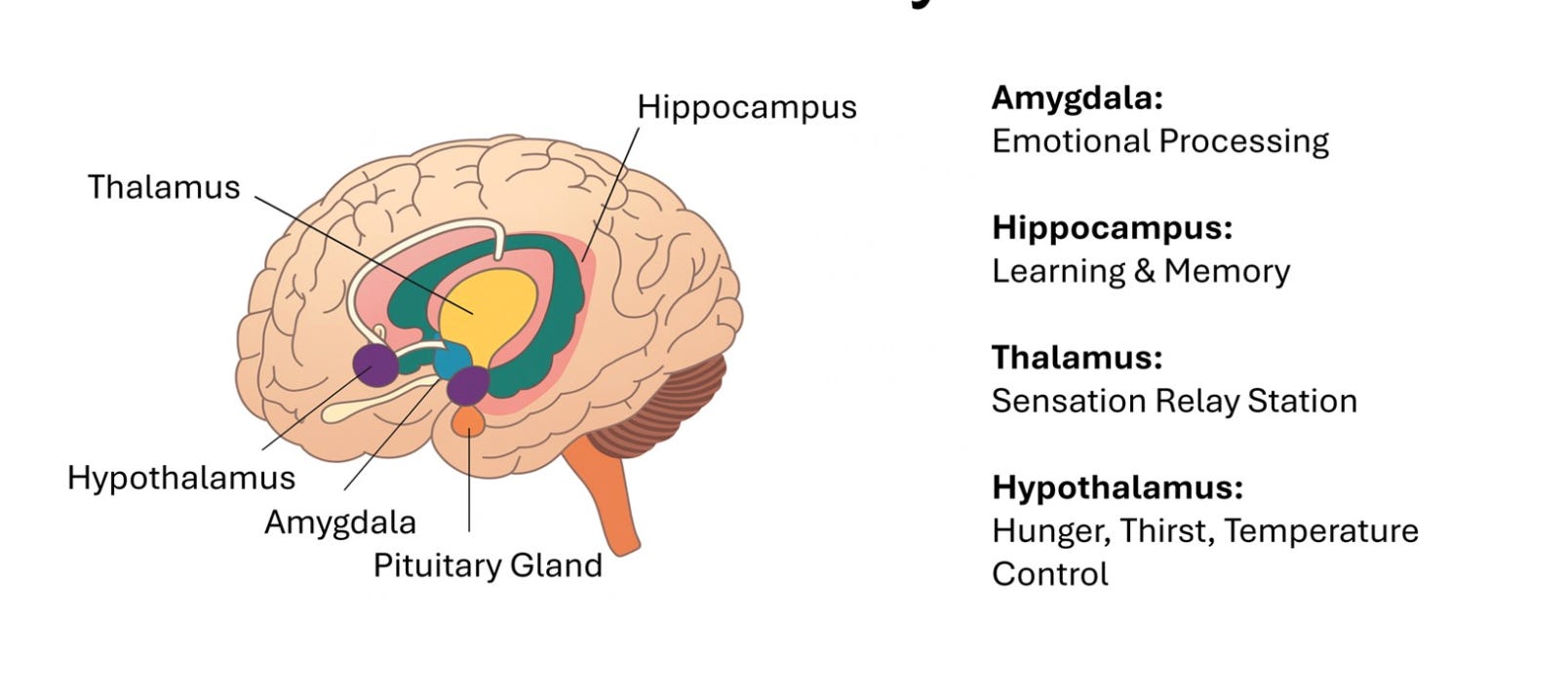
When you make a mistake — your amygdala registers it the same way it registers a physical threat.
Cortisol releases. The nervous system activates. The inner critic begins.
“You are not good enough. You always do this. Everyone saw. You will never change.”
That voice is not your conscience.
It is your threat response trying to prevent future danger by making you afraid of yourself.
And unlike an external threat — which ends when the threat leaves — self-directed criticism has no off switch.
When someone criticises you — they leave. The threat response winds down.
When you criticise yourself — you are both the predator and the prey. The threat never leaves. So the loop never stops.
In 90% of people — this loop runs for 72 hours after a single mistake.
Not because the mistake warranted 72 hours of processing. Because the brain has no mechanism to signal to itself that the internal danger is over.
What You’ll Learn in This Post:
→ Why self-criticism is uniquely exhausting — the neuroscience
→ Why every strategy most people use to stop it makes it run longer
→ The exact 3-step neurological intervention that stops it within 3 minutes (paid section)
→ Why self-compassion after failure produces better performance than the critic ever did
→ Read time: 5 min
You don’t need to believe this will work. The nervous system doesn’t require belief. It responds to specific signals. The 3-step practice sends the signal. That’s the entire mechanism.
Why Everything You’ve Tried Makes It Worse
→ 1. Why self-criticism is more exhausting than any external criticism
External criticism activates the threat response. Then the person leaves. Self-criticism activates the threat response — and then stays in the room permanently.
When someone criticises you externally — your amygdala activates, cortisol releases, the threat response runs. Then the person leaves the room. Your brain receives an environmental signal: the threat has passed. The threat response begins to wind down. With self-criticism — you are simultaneously the threat and the person experiencing the threat. There is no environmental departure signal. The amygdala remains activated. Cortisol continues to release. The nervous system cannot distinguish between the memory of the mistake and the mistake itself. Every replay is a fresh activation. The loop runs — and runs — and has nothing to signal to it that the danger is finally over.
Self-directed criticism → amygdala activation with no off signal → sustained cortisol → nervous system in continuous threat mode → sleep disrupted → 2am replay loop → morning cortisol already elevated → next day starts already in threat mode.
The Wednesday night lying awake replaying Tuesday’s mistake. The Thursday morning that starts already heavy. The specific exhaustion of being tired AND still running the loop. That is not weakness. That is a biological mechanism running without an off switch.

→ 2. Why pushing harder to prove the critic wrong makes the loop run longer
Every strategy that operates inside the threat response keeps the amygdala activated. Including the strategies designed to end it.
This is Neff’s most counterintuitive finding — and the one that dismantles most self-improvement advice. When you try to prove the critic wrong by working harder, achieving more, or performing better — you are accepting the critic’s premise. You are operating inside the threat response. The amygdala reads your effort as confirmation that a threat is present — because calm, safe systems don’t need to try this hard to prove themselves. The harder you push to silence the critic, the louder the signal to your nervous system that the threat is real and ongoing.
Trying harder to prove critic wrong → threat response reads effort as threat confirmation → cortisol stays elevated → performance impaired → more mistakes possible → critic has more evidence → loop intensifies.
The parent who responds to snapping at their kids by immediately trying to compensate — planning the perfect weekend, buying something, over-correcting. Not from love. From the critic. And the critic runs harder because of it.
→ 3. Why positive affirmations, distraction, and suppression all fail
Every strategy most people use keeps the amygdala activated. Because they are all still operating inside the threat response — not outside it.
Positive affirmations after failure feel hollow — and Neff’s research explains precisely why. The threat response is still active. Your brain evaluates the affirmation against its current threat assessment. “I am good enough” lands against a background of activated cortisol and reads as false. The brain registers the discrepancy. The threat response stays engaged. Distraction suppresses the loop temporarily — but the moment the distraction ends, the unresolved threat signal resumes exactly where it stopped. Suppression produces the same outcome through a different mechanism — the suppressed material resurfaces when the suppression effort drops. All three strategies share one flaw: they are trying to manage the output of the threat response while the threat response itself keeps running.
All three strategies → threat response remains activated underneath → cortisol continues → loop resumes when strategy ends → progressive exhaustion as each strategy requires more effort to suppress less effectively.
The affirmations that feel false when you say them. The Netflix that doesn’t make you feel better the next morning. The busyness that works until it stops. Each one a temporary lid on a loop that hasn’t been given the signal it needed to end.
You’ve just read why the loop runs for 72 hours. And why everything you’ve tried to stop it has been working inside the threat response instead of outside it.
Here’s what I know from working through this individually with people:
The loop looks different for everyone.
For some parents it runs after a work mistake. For others it runs after a parenting moment — the snapping, the impatience, the times they weren’t present. For others it runs after a social interaction — the thing they said, the impression they left.
So I want to ask you honestly:
What does your critic most often run about?
Reply to this post with your honest answer. One sentence is enough.
I read every reply personally — and based on what you share, I’ll respond with the specific thing that applies to your pattern.
Not a generic response. Something that fits where your loop actually lives.
This is the part of the newsletter most people don’t know is available.
Reply now. I’m reading. 💚
Here’s the exact 3-step intervention.
The one Neff’s research confirmed stops the loop within 3 minutes.
Not because it makes you feel better about what happened. Because it sends your brain a signal it actually recognises as safety.
And after the practice: the finding that overturns everything the self-improvement industry has ever taught about accountability, discipline, and performance after failure.
It will change how you think about the critic permanently.
Paid members already have the full self-compassion protocol for this week.
